
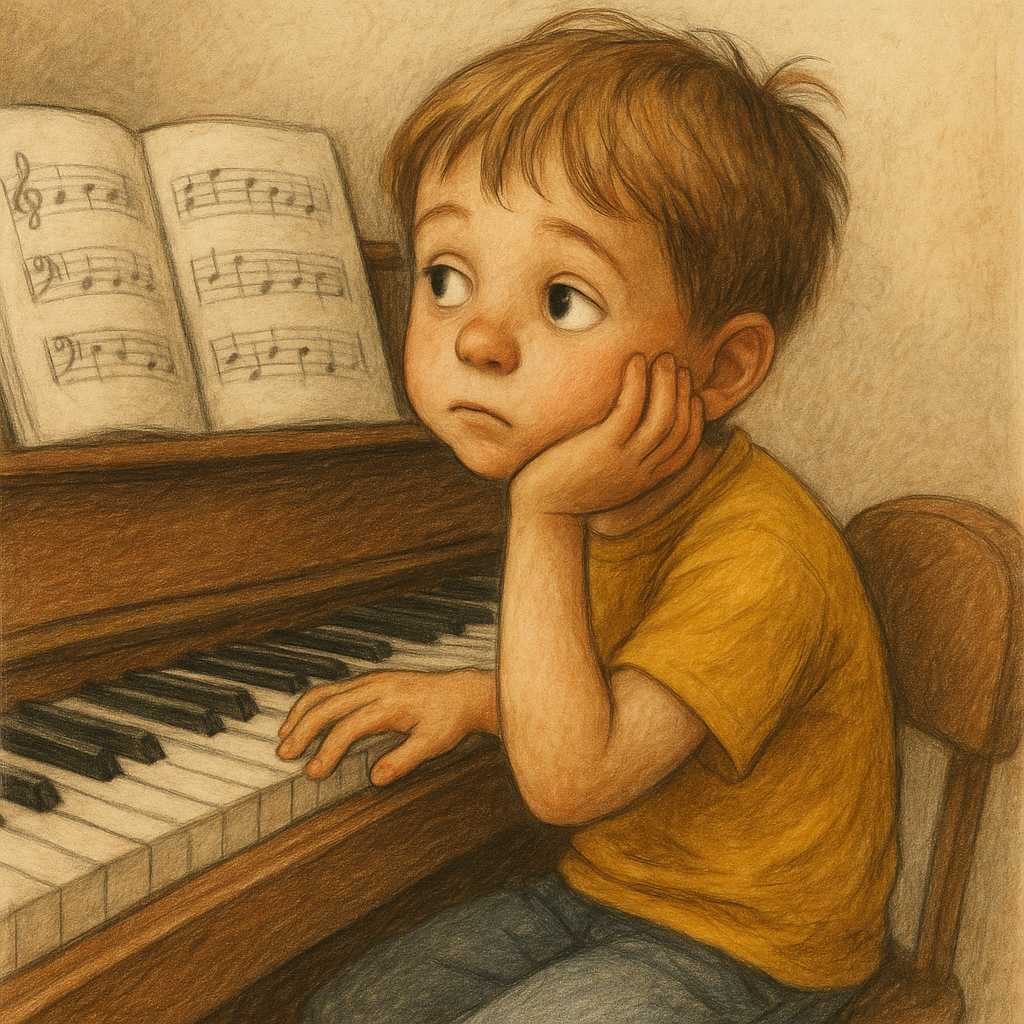
Discover the common distractions and challenges that prevent young piano students from staying engaged, and learn how to create an environment where focus and musical growth flourish.
Understanding Why Young Musicians Struggle to Stay Present
When children sit down at the piano, their ability to maintain focus is influenced by a complex interplay of developmental, environmental, and instructional factors. Young musicians often struggle to stay present during lessons not because they lack interest in music, but because the learning environment or teaching approach may not align with their developmental needs and natural learning patterns. Understanding these underlying factors is the first step toward creating an engaging, productive lesson experience that nurtures long-term musical growth.
Children's attention spans naturally vary by age, with younger students typically able to focus for shorter periods than their older counterparts. A five-year-old may have an attention span of 10 to 15 minutes for a single activity, while a ten-year-old might maintain focus for 20 to 30 minutes. When piano lessons extend beyond these developmental capacities without incorporating varied activities or movement breaks, children naturally begin to disengage. This is not a reflection of their musical potential, but rather a normal developmental reality that requires thoughtful instructional planning.
Additionally, kids piano lesson engagement depends heavily on how instruction connects to their personal interests and learning style. When lessons feel abstract or disconnected from music they recognize and enjoy, children may struggle to see the relevance of technical exercises or theory concepts. Creating meaningful connections between foundational skills and the music that excites young learners is essential for maintaining their presence and enthusiasm throughout each session.
Environmental and Physical Factors That Disrupt Concentration
The physical environment where piano lessons take place significantly impacts children piano motivation and their ability to maintain focus. Visual clutter, excessive noise, uncomfortable seating, and poor lighting can all contribute to attention span in piano lessons challenges. When the learning space contains distractions such as toys, electronic devices, or high-traffic areas where family members frequently pass by, children naturally direct their attention away from the piano and toward these more stimulating elements.
Physical discomfort is another often-overlooked factor that disrupts concentration. If the piano bench is too high or too low, if a child's feet do not rest comfortably on the floor or a footstool, or if the room temperature is uncomfortably warm or cold, these physical discomforts become persistent distractions that pull focus away from learning. Young musicians need a comfortable, ergonomically appropriate setup that allows them to concentrate fully on developing proper technique and musical expression.
The immediate fix for environmental distractions involves creating a dedicated, distraction-free practice and lesson space. Remove unnecessary items from the piano area, ensure proper lighting that reduces eye strain, and establish the space as a music-only zone. Invest in an adjustable piano bench and footstool to ensure proper posture and comfort. Consider using a white noise machine or soft background music to mask household sounds during practice sessions. These simple environmental adjustments create a physical space that supports sustained attention and meaningful engagement with the instrument.
Age-Appropriate Instruction and Developmental Readiness
One of the most significant piano practice challenges for kids stems from instruction that does not align with their developmental stage. When lesson content is too advanced, children experience frustration and confusion that quickly erodes motivation. Conversely, when material is too simple, boredom sets in and engagement disappears. Age-appropriate instruction recognizes that young learners progress through predictable developmental stages, and effective teaching meets children exactly where they are while gently guiding them toward the next level of skill.
Developmental readiness extends beyond cognitive ability to include physical coordination, emotional maturity, and social awareness. A child who begins piano lessons before developing adequate fine motor control may struggle with finger independence and hand position, leading to discouragement. Similarly, young students who have not yet developed the emotional capacity to tolerate mistakes or persist through challenges may become easily frustrated when learning does not happen immediately. Recognizing these developmental realities allows parents and teachers to set realistic expectations and provide appropriate support.
The practical solution involves careful assessment of each child's developmental stage before beginning lessons and regularly throughout their musical education. For very young beginners (ages 4-6), focus on exploration, sound discovery, and simple pattern recognition rather than formal note reading and complex theory. Use games, movement, and storytelling to teach musical concepts. For children ages 7-10, introduce more structured learning while maintaining playful elements and frequent changes of activity. For older children and teens, gradually increase lesson complexity while honoring their growing need for autonomy and creative expression. This developmentally responsive approach keeps instruction appropriately challenging without overwhelming young learners, supporting both keeping kids engaged in music lessons and building sustainable motivation.
Building Motivation Through Personalized Musical Goals
Children lose focus in piano lessons when they do not understand why they are learning particular skills or how those skills connect to their personal musical interests. Generic lesson plans that follow a one-size-fits-all curriculum without considering individual student preferences often fail to generate the intrinsic motivation necessary for sustained engagement. When young musicians do not see themselves reflected in the music they are learning, lessons become an obligation rather than an opportunity for joyful expression.
Motivation thrives when children have agency in their musical education and when goals feel personally meaningful rather than externally imposed. A student who loves video game music will engage more deeply when learning arrangements from their favorite games. A child who enjoys singing along to popular music will find piano more relevant when they can play songs they recognize and enjoy. When students participate in setting their own learning goals—whether mastering a particular piece, learning to play by ear, or performing for family—they develop ownership over their progress and increased commitment to practice.
The immediate fix involves incorporating fun piano teaching strategies that honor each student's musical preferences while building essential foundational skills. Begin lessons by asking children about music they love and gradually introduce appropriate arrangements of that music alongside traditional method book material. Set personalized, specific goals together with each student—such as preparing a favorite song for a family gathering or learning three new chord progressions—and celebrate progress toward those goals. Create opportunities for students to make choices during lessons, such as selecting which piece to work on first or deciding whether to focus on a technical exercise or a performance piece. Use visual progress charts or digital tracking tools to help children see their advancement over time. This personalized, goal-oriented approach directly addresses children piano motivation by connecting instruction to individual interests and fostering a sense of purpose and accomplishment.
Creating Sustainable Practice Habits That Support Long-Term Growth
Even when lessons themselves are engaging, children lose focus and motivation if their practice habits between lessons are inconsistent or characterized by frustration. Many piano practice challenges for kids stem from unclear practice expectations, overwhelming practice assignments, or a lack of structure that leaves children unsure how to use their practice time effectively. Without guidance on how to practice—not just what to practice—young musicians often repeat mistakes, become discouraged, and gradually disengage from their musical education.
Sustainable practice habits are built on realistic time commitments, clear structure, and positive reinforcement. Young beginners (ages 5-7) typically succeed with 10-15 minutes of daily practice, while older elementary students (ages 8-11) can gradually build toward 20-30 minutes. Rather than expecting children to practice for extended periods that exceed their attention span, shorter, more frequent practice sessions yield better results. Additionally, practice sessions need structure: a consistent warm-up routine, focused work on specific sections of music, and time for creative play or review of favorite pieces.
The practical solution involves creating a structured practice routine that builds consistency while preventing burnout. Work with young students and their parents to establish a specific, consistent practice time each day—ideally at the same time to build habit formation. Break practice time into smaller segments: five minutes of warm-up exercises, ten minutes working on new material, five minutes reviewing familiar pieces, and five minutes of free exploration or improvisation. Use practice journals or apps where children can track their daily practice and note what they worked on, creating accountability and a sense of accomplishment. Teach children specific practice strategies such as slow practice, hands-separate practice, and isolating difficult measures rather than simply playing through pieces repeatedly. Encourage parents to provide positive feedback about effort and persistence rather than only praising perfect performance, helping children develop resilience and a growth mindset. Finally, regularly reassess practice assignments to ensure they are appropriately challenging but not overwhelming—if a child consistently struggles to complete assignments, reduce the quantity or complexity rather than risking discouragement. These strategies create sustainable practice habits that support attention span in piano lessons by building confidence, competence, and genuine enjoyment of the learning process.