
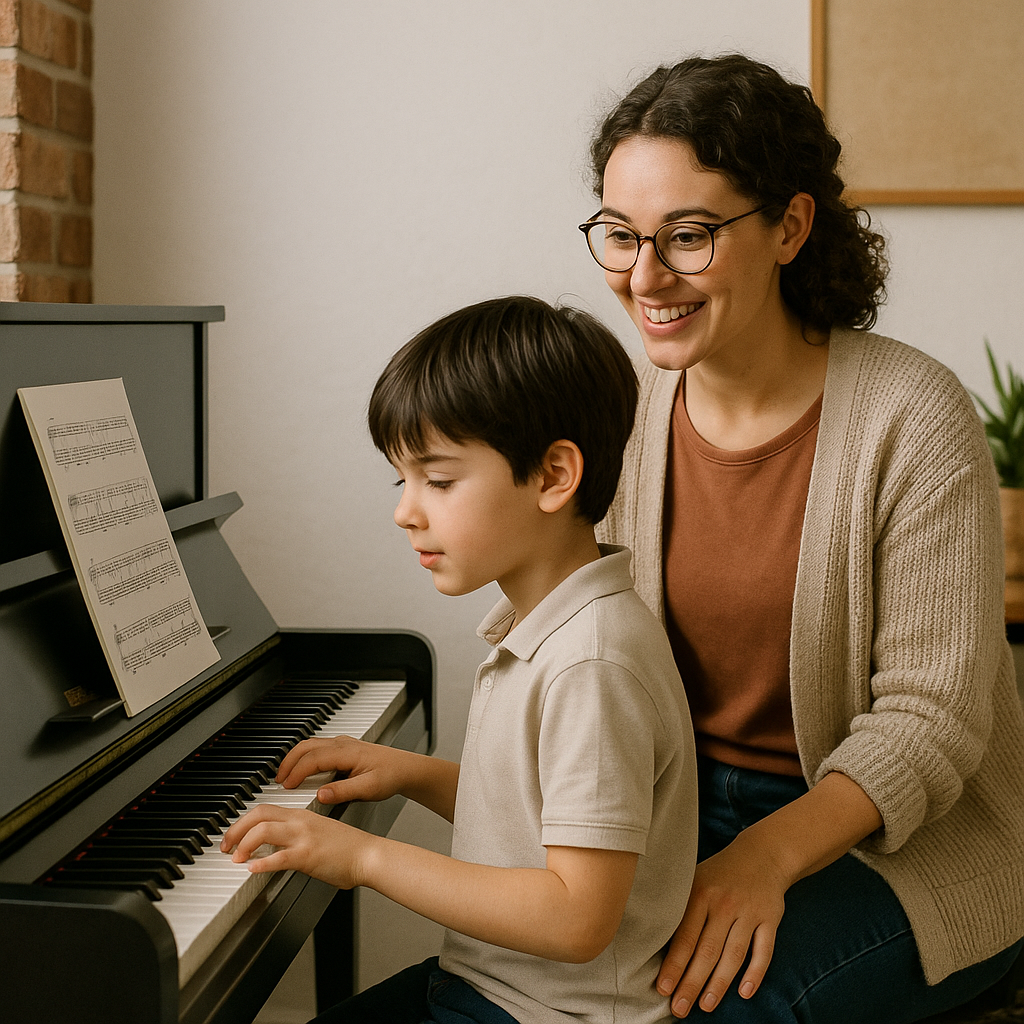
Discover the common challenges that distract young musicians during piano practice and learn practical strategies to help your child stay engaged and motivated throughout their musical journey.
Understanding Why Attention Wanders During Piano Practice
When young musicians sit down at the piano bench, their minds can wander in countless directions. Understanding the root causes of lost focus is the first step toward creating meaningful engagement during piano lessons and practice sessions. Children's attention challenges during music lessons are rarely about lack of talent or interest—they stem from a complex mix of developmental factors, environmental influences, and instructional approaches that may not align with their needs.
Kids piano lesson engagement depends heavily on recognizing that every child processes musical learning differently. Some children thrive with visual cues, while others need kinesthetic activities or auditory repetition. When instruction doesn't match a child's learning style, their attention naturally drifts. Additionally, the abstract nature of reading music notation combined with the physical coordination required to play piano creates cognitive demands that can overwhelm young learners, especially during longer practice sessions.
The challenges that distract young pianists often compound over time if not addressed early. A child who struggles to maintain focus during one lesson may develop negative associations with piano practice, creating a cycle that affects children piano motivation in subsequent sessions. By identifying specific attention blockers—from lesson length to teaching methods—parents and instructors can implement targeted solutions that transform piano lessons from frustrating obligations into engaging musical experiences that build confidence and genuine love for music.
Physical and Environmental Factors That Impact Concentration
**Reason 1: Uncomfortable Seating and Poor Posture** - When children slouch, strain to reach the pedals, or sit too high or low at the piano, their bodies become a distraction. Physical discomfort pulls attention away from the music and makes practice feel like a chore. **The Fix:** Invest in an adjustable piano bench that positions your child so their elbows are slightly higher than the keyboard, with feet flat on the floor or on a footstool. Proper ergonomics support attention span in piano lessons by eliminating physical distractions and preventing fatigue.
**Reason 2: Environmental Distractions and Noise** - Televisions playing in adjacent rooms, siblings running through practice spaces, or windows facing busy streets create constant interruptions that fragment a child's concentration. Young musicians need a dedicated practice environment that signals it's time to focus. **The Fix:** Designate a quiet practice area away from household traffic and screen distractions. Consider using a practice schedule that other family members respect, and add sound-dampening elements like curtains or rugs if needed. Creating this focused environment demonstrates that piano practice is valued family time.
**Reason 3: Poor Lighting and Visual Strain** - Inadequate lighting forces children to squint at sheet music, creating eye strain and headaches that quickly drain their attention. When reading music becomes physically uncomfortable, keeping kids engaged in music lessons becomes nearly impossible. **The Fix:** Position a dedicated piano lamp or adjustable light source to illuminate sheet music without creating glare on the keys. Natural daylight works beautifully during daytime practice, but avoid direct sunlight that creates harsh shadows or makes it difficult to see the music clearly.
Age-Appropriate Expectations and Developmental Readiness
**Reason 4: Lessons That Exceed Age-Appropriate Attention Spans** - A typical five-year-old can maintain focused attention for approximately 10-15 minutes, while an eight-year-old might sustain concentration for 20-25 minutes. When piano lessons or practice sessions significantly exceed these developmental capacities, children inevitably lose focus—not because they lack dedication, but because their brains aren't developmentally ready for extended concentration. **The Fix:** Structure piano practice challenges for kids into shorter, varied segments with clear goals. For younger students, try three 10-minute practice sessions throughout the day rather than one 30-minute block. Incorporate brief movement breaks between segments to reset attention.
**Reason 5: Material That's Too Advanced or Too Simple** - When music is consistently beyond a child's current skill level, frustration replaces engagement. Conversely, material that's too easy breeds boredom and signals that practice isn't valuable. Both scenarios undermine children piano motivation by failing to provide the optimal challenge zone where learning feels both achievable and rewarding. **The Fix:** Work with your piano teacher to select repertoire that incorporates mostly familiar concepts with just one or two new challenges per piece. This 'stretch zone' approach keeps children engaged without overwhelming them. Celebrate mastery of simpler pieces while gradually introducing complexity.
**Reason 6: Insufficient Understanding of Musical Concepts** - Abstract concepts like rhythm, dynamics, and note values can feel meaningless to concrete-thinking children, especially those under age 8. When instruction relies heavily on verbal explanations without hands-on demonstration, young learners quickly disengage from material they can't grasp. **The Fix:** Employ fun piano teaching strategies that make abstract concepts tangible. Use physical movement to teach rhythm—marching, clapping, or tapping. Relate dynamics to familiar concepts like whisper-voices and outdoor-voices. Connect musical patterns to things children already understand, transforming theory into relatable, memorable concepts.
Teaching Methods That Support Sustained Engagement
**Reason 7: Monotonous Repetition Without Purpose** - Drilling scales or repeating problem measures without context or explanation creates mindless practice that fails to engage a child's natural curiosity. When young musicians don't understand why they're repeating something or how it connects to their musical goals, repetition feels punitive rather than productive. **The Fix:** Frame each repetition with specific, achievable objectives. Instead of 'Play this five times,' try 'Let's focus on smooth finger transitions in this measure. Play it three times, and let's see if we can make each transition smoother than the last.' Purposeful practice with clear goals transforms repetition from boring drill work into engaging problem-solving.
**Reason 8: Lack of Variety in Lesson Activities** - Sitting at the piano for an entire 30 or 45-minute lesson without varied activities exhausts children's attention resources. Keeping kids engaged in music lessons requires intentional variety that addresses different aspects of musical development through diverse activities. **The Fix:** Structure lessons and practice with multiple activity types: start with warm-up exercises, move to new concept introduction with away-from-piano activities, return to the keyboard for application, incorporate listening activities, and end with something the child enjoys playing. This varied approach maintains engagement by providing natural attention resets.
**Reason 9: Insufficient Positive Reinforcement** - Children need regular encouragement and specific recognition of their efforts to maintain motivation. When instruction focuses primarily on corrections without acknowledging progress, young musicians internalize that piano is about constantly falling short. This erodes self-belief and makes sustaining attention feel pointless. **The Fix:** Implement a 3:1 ratio of positive observations to constructive feedback. Notice specific improvements: 'Your left hand is much steadier today' or 'I heard you remember that dynamic change without looking at the music.' This nurturing approach builds confidence and creates an environment where children want to engage fully because their efforts are recognized and valued.
Building Long-Term Motivation and Musical Confidence
**Reason 10: Disconnect Between Lessons and Personal Musical Interests** - When lesson material never includes music children actually want to play—songs from favorite movies, current popular music, or genres they enjoy—piano feels like an obligation rather than a path to making music that matters to them. This disconnect between instruction and personal interest is one of the most significant barriers to children piano motivation. **The Fix:** Regularly incorporate student choice into lesson planning. Allow children to select one piece per month from music they love, even if it requires simplified arrangements. This balance between foundational skill-building and personal expression demonstrates that piano instruction serves their musical interests, not just traditional expectations.
**Reason 11: Absence of Performance Goals and Celebration** - Without meaningful performance opportunities—whether informal family concerts, recitals, or recording projects—piano practice lacks purpose beyond weekly lessons. Children need to understand that they're building toward something, and they need opportunities to experience the joy and confidence that come from sharing their musical achievements. **The Fix:** Create regular, low-pressure performance opportunities that celebrate progress. Monthly family mini-recitals, video recordings to share with relatives, or participation in studio recitals give practice sessions clear purpose. These experiences build musical confidence and provide motivation that extends well beyond individual practice sessions.
Addressing these eleven focus blockers requires patience, observation, and willingness to adapt approaches based on each child's unique needs and developmental stage. By creating supportive physical environments, setting age-appropriate expectations, implementing engaging teaching methods, and connecting instruction to genuine musical interests, parents and teachers can transform piano lessons from attention struggles into engaging experiences that build lifelong musical confidence. The goal isn't perfect focus during every moment of practice—it's creating conditions where children can engage authentically with music, develop skills progressively, and build positive associations with musical learning that will serve them throughout their lives. When attention span in piano lessons improves naturally through these supportive strategies, children discover that making music is both achievable and deeply rewarding.