
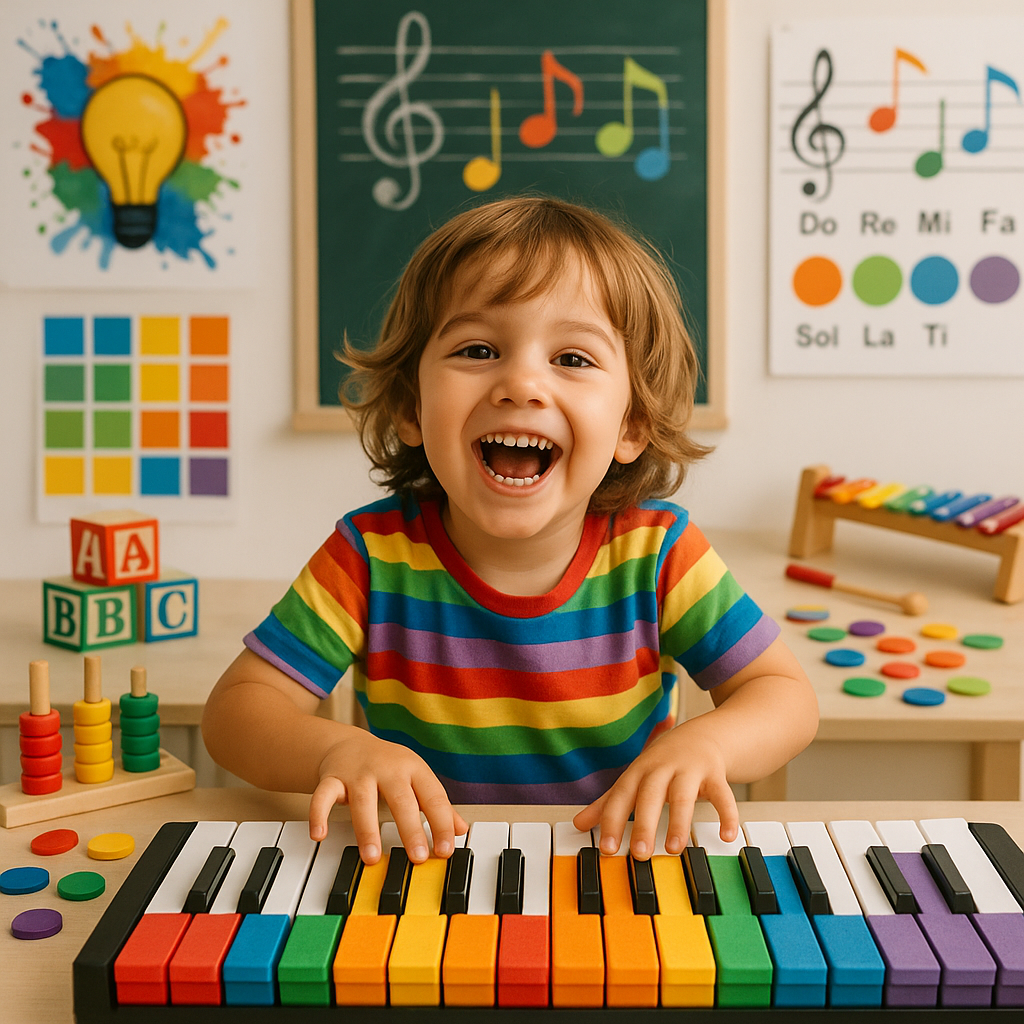
Discover proven strategies to transform piano lessons into engaging, joyful experiences that inspire young musicians to stay motivated and develop a lifelong love of music.
Create Interactive Learning Experiences That Spark Curiosity
Young learners thrive when piano instruction moves beyond passive repetition and becomes a dynamic, hands-on exploration. For children ages 4–12, attention spans vary widely—ranging from just a few minutes for preschoolers to 20–30 minutes for older elementary students. Structuring lessons around short, focused intervals prevents mental fatigue and keeps curiosity alive. Rather than asking a child to practice a single piece for 15 minutes straight, break the session into three 5-minute segments, each with a distinct focus: melody recognition, hand positioning, and rhythm patterns.
Interactive learning experiences invite children to discover musical concepts through exploration rather than instruction alone. Encourage students to experiment with dynamics by asking them to play a passage as softly as a whisper, then as boldly as a lion's roar. Introduce call-and-response exercises where the instructor plays a short musical phrase and the student echoes it back, fostering active listening and immediate engagement. Use visual aids such as color-coded keyboard stickers or flashcards that link musical notes to familiar objects or characters, helping younger learners make meaningful connections between abstract symbols and concrete sounds.
Technology can also serve as a powerful tool for keeping kids engaged in piano lessons. Piano learning apps and software that provide instant feedback on pitch accuracy and rhythm help students see their progress in real time, transforming practice from a solitary task into an interactive game. However, balance digital tools with traditional hands-on activities to ensure children develop a deep, tactile understanding of the instrument. By rotating between visual, auditory, and kinesthetic learning modes within each lesson, you address diverse learning styles and maintain high levels of child motivation in music lessons.
Incorporate Games and Creative Activities Into Practice Time
Games transform repetitive drills into exciting challenges that children eagerly anticipate. Fun piano teaching methods leverage the natural playfulness of young learners to reinforce technical skills without the tedium often associated with traditional practice. Simple activities like 'Musical Bingo' can make note recognition enjoyable: create bingo cards filled with musical notes, and as the instructor or parent calls out each note, the child covers it on their card and plays it on the piano. The first to complete a row wins a small reward, turning scale practice into a competitive and rewarding experience.
Creative activities also provide opportunities for self-expression, which is essential for sustaining long-term interest. Encourage students to compose their own short melodies using a limited set of notes or to improvise accompaniments to their favorite songs. This approach not only builds musical confidence but also gives children ownership of their learning journey. Another effective strategy is to use storytelling: ask the child to imagine their piano piece as the soundtrack to an adventure, with loud sections representing storms and soft sections depicting quiet forests. This narrative framework makes abstract musical concepts tangible and emotionally resonant.
Incorporating movement and rhythm games further addresses attention span and boredom in lessons. Activities like clapping rhythms, stepping to the beat, or using percussion instruments alongside piano practice help kinesthetic learners internalize timing and tempo. For younger children, turning warm-up exercises into silly songs or animal-themed finger exercises keeps the mood light and engaging. Remember, the goal is not to eliminate structure but to embed it within a playful context that feels less like work and more like discovery. These piano practice strategies for children build both skill and enthusiasm, creating a foundation for lifelong musical engagement.
Set Achievable Goals That Build Confidence and Momentum
Micro-goals are essential for maintaining motivation and preventing overwhelm in young piano students. Instead of setting a vague objective like 'learn this piece,' break the learning process into specific, measurable tasks: 'play the first four measures with the right hand,' 'identify all the C notes in the song,' or 'play the left-hand bass line three times without stopping.' These small, concrete targets are easier for children to visualize and accomplish, providing frequent opportunities for success that build confidence and momentum.
Tracking progress visually reinforces achievement and keeps students motivated between lessons. Create a practice chart where children earn stickers or stamps for completing daily practice sessions or mastering specific skills. Display this chart prominently at home so the child can see their progress accumulate over time. For older students, consider maintaining a practice journal where they record what they worked on, what challenges they faced, and what they accomplished. This reflective practice helps children develop metacognitive skills and recognize their own growth, which is crucial for sustaining child motivation in music lessons.
Celebrate milestones in meaningful ways that align with each child's interests. Some children thrive on public recognition, such as performing a newly mastered piece for family members or at a small recital. Others prefer quieter acknowledgments, like choosing the next song to learn or earning extra time to explore improvisation. The key is to make goals attainable yet challenging enough to require effort, striking a balance that keeps students in the optimal zone for learning. When children experience consistent success through incremental progress, they develop resilience and a growth mindset that extends beyond piano lessons into all areas of life.
Personalize Instruction to Match Each Child's Interests and Learning Style
Every child brings a unique combination of interests, strengths, and learning preferences to piano lessons. Personalization begins with understanding what excites each student musically. Does the child love movie soundtracks, pop songs, classical pieces, or video game themes? Incorporating repertoire that resonates with the student's existing musical tastes dramatically increases engagement and makes practice time something they look forward to rather than dread. When a 9-year-old who loves superheroes gets to learn the theme from their favorite movie, piano suddenly becomes relevant and meaningful to their world.
Learning style differences are equally important to address when keeping kids engaged in piano lessons. Visual learners benefit from watching demonstration videos, using color-coded sheet music, and observing proper hand positioning through mirrors. Auditory learners thrive when they can listen to recordings of pieces they're learning, participate in ear-training exercises, and explore improvisation through sound experimentation. Kinesthetic learners need movement integrated into lessons—clapping rhythms, bouncing to the beat, or using large arm motions to understand phrasing. By observing how each child responds to different teaching approaches during the first few lessons, instructors and parents can adapt their methods to align with natural learning tendencies.
Age-appropriate differentiation is also critical for addressing music lesson engagement challenges. Four- and five-year-olds need extremely short activities—often just 2–3 minutes each—with frequent transitions and plenty of physical movement breaks. They respond well to puppet characters, simple songs with lyrics, and games that involve the whole body. Children ages 6–9 can handle slightly longer focus periods of 5–10 minutes and benefit from puzzles, pattern recognition activities, and achievable technical challenges. Older elementary students ages 10–12 often enjoy more analytical approaches, such as understanding chord progressions, exploring music theory concepts, and setting their own practice goals. By meeting each child where they are developmentally and personally, you create a customized learning experience that honors their individuality and maximizes engagement.
Foster a Supportive Environment That Celebrates Progress and Effort
The emotional atmosphere surrounding piano lessons significantly influences a child's willingness to persist through challenges. A supportive environment is one where mistakes are reframed as valuable learning opportunities rather than failures. When a child plays a wrong note or struggles with a difficult passage, respond with encouraging language: 'That's a tricky part—let's break it down together' or 'I noticed you almost had it that time! Let's try once more with a slower tempo.' This approach builds resilience and helps children develop a healthy relationship with challenge and effort, understanding that growth requires patience and practice.
Celebrating effort alongside achievement reinforces the value of persistence and hard work. While it's natural to praise a perfectly played piece, it's equally important to recognize the process: 'I can tell you practiced that section multiple times this week—your dedication is really showing!' or 'You kept trying even when it was hard, and that's what makes a great musician.' This kind of feedback nurtures intrinsic motivation, helping children develop self-belief and understand that their actions directly influence their progress. Avoid counterproductive language that undermines confidence, and instead focus on constructive, specific feedback that guides improvement.
Creating a judgment-free practice space at home is equally essential for maintaining child motivation in music lessons. Designate a comfortable, distraction-free area for piano practice where the child feels safe to experiment and make mistakes. Parents should resist the temptation to hover or criticize during practice sessions; instead, show interest by occasionally listening from another room and offering genuine, specific compliments afterward. Consider establishing a family culture that values musical exploration—where playing music is seen as a joyful activity rather than a chore or performance obligation. When children feel supported, encouraged, and free to express themselves musically without fear of judgment, they develop authentic enthusiasm for piano that can last a lifetime. This nurturing, authentic approach transforms lessons from a source of stress into a source of joy, creativity, and personal growth.