
Discover how cheer tumbling skills progress naturally through each developmental stage, helping your child build confidence, strength, and athleticism in a supportive Mansfield environment.
Why Age-Appropriate Tumbling Development Matters for Young Athletes
When parents in Mansfield search for tumble classes Mansfield or gymnastics classes for their children, they're making an investment that extends far beyond physical skills. Age-appropriate tumbling development forms the foundation for safe, progressive athletic growth that respects your child's physical, cognitive, and emotional readiness at each stage. Understanding how tumbling classes should align with developmental milestones helps ensure your young athlete builds proper technique, prevents injury, and cultivates lasting confidence.
Quality kids tumbling programs recognize that a two-year-old's motor skills, attention span, and body awareness differ dramatically from those of a teenager preparing for competitive cheer. Rushing progression or placing children in classes beyond their developmental stage can compromise safety, create frustration, and establish poor movement patterns that become difficult to correct later. Conversely, age-appropriate instruction allows children to master foundational skills thoroughly, building the strength, flexibility, and body control necessary for more advanced tumbling techniques.
In Mansfield, families seeking tumbling classes benefit from programs that prioritize gradual skill acquisition over rapid advancement. This approach not only protects growing bodies from overuse injuries but also fosters intrinsic motivation and self-belief. When children experience success at skills matched to their capabilities, they develop resilience, learn to embrace challenges, and build the mental toughness that serves them both in athletics and life. Age-appropriate tumbling development respects the whole child, nurturing physical abilities alongside character and confidence.
Preschool and Early Elementary Tumblers: Building Foundations Through Play
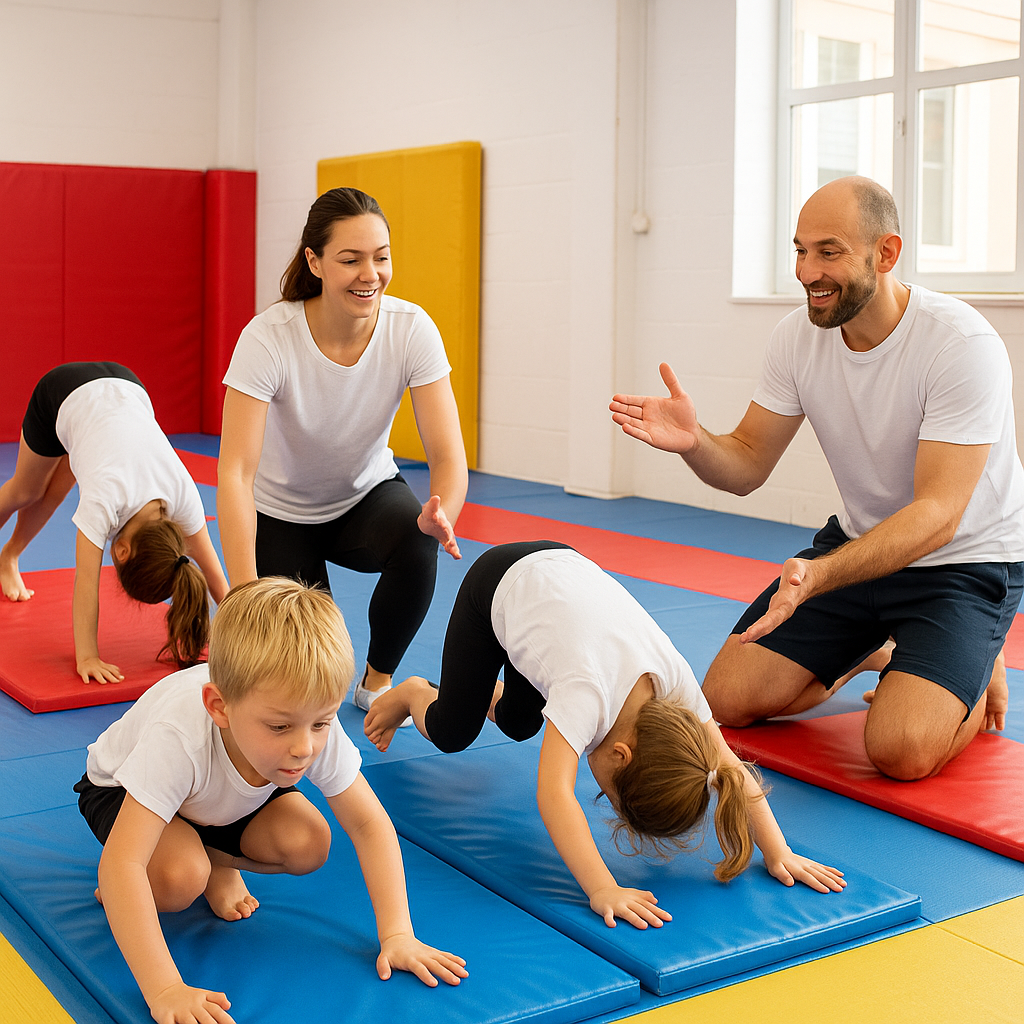
For toddler tumbling and preschool-aged children (ages 2-6), the primary focus is building fundamental movement skills through playful, engaging activities. At this developmental stage, children are refining gross motor skills like running, jumping, rolling, and balancing. Tumbling classes for this age group introduce basic gymnastics movements—forward rolls, log rolls, cartwheels, and balance beam activities—in a fun, low-pressure environment that emphasizes exploration and body awareness rather than perfection.
Parents attending their first session with a young child can expect short attention spans, frequent transitions between activities, and instructors who use creative imagery and games to teach concepts. A quality toddler tumbling class in Mansfield will maintain small teacher-to-student ratios, ensuring each child receives individual attention and appropriate spotting. Safety is paramount: instructors should use proper progressions, padded equipment, and controlled environments that allow children to challenge themselves while minimizing risk.
During these foundational years, the most important outcomes are developing a love of movement, building core strength and coordination, and learning to follow directions in a group setting. Children at this age benefit from positive reinforcement, supportive encouragement, and patient instruction that celebrates effort and progress. Parents should look for programs that focus on confidence-building rather than competitive achievement, understanding that these early experiences shape how children view themselves as athletes and learners for years to come.
What to expect in a first session: Your child will likely participate in warm-up activities involving stretching and controlled movement exercises, practice basic tumbling skills on mats with instructor assistance, explore balance and coordination through obstacle courses or beam activities, and enjoy a structured cooldown. Instructors should communicate clearly with both children and parents, explaining what skills are being developed and how families can support practice at home safely.
Middle Elementary Years: Advancing Skills with Proper Technique and Safety
As children enter the middle elementary years (ages 7-11), their tumbling classes in Mansfield should reflect increased physical capabilities, longer attention spans, and greater capacity for learning complex motor patterns. At this stage, kids tumbling programs progress from foundational movements to more advanced skills like round-offs, back walkovers, front and back handsprings, and connected tumbling passes. Proper technique becomes increasingly important, as children develop the strength and body control necessary for skills that demand precision and spatial awareness.
Quality cheer tumbling instruction for this age group emphasizes the progressive development of skills through proper progressions and spotting techniques. Instructors should break down complex movements into manageable components, using drills that build muscle memory and ensure children understand proper body alignment, hand placement, and momentum control. Safety standards remain paramount: children should demonstrate mastery of prerequisite skills before advancing, and programs should maintain appropriate equipment, supervision, and training protocols.
Parents can expect their middle elementary tumblers to begin developing individual strengths and preferences during this stage. Some children excel at power-based skills like handsprings, while others demonstrate exceptional flexibility for walkovers and needle kicks. A supportive tumbling program recognizes these individual differences, providing personalized instruction tailored to each child's abilities and goals while maintaining consistent safety standards and technique requirements across all skill levels.
During a typical session, children will participate in structured warm-ups that prepare muscles and joints for tumbling, practice specific skills with instructor spotting and feedback, work on strength and flexibility exercises that support tumbling development, and have opportunities to practice skills independently or in small groups. Parents should observe that instructors provide constructive feedback and technique correction, helping children understand not just what to do, but why proper form matters for both performance and injury prevention. This age represents a critical window for establishing excellent technique habits that will serve young athletes throughout their tumbling careers.
Pre-Teen and Teen Tumblers: Mastering Complex Skills and Performance Ready Sequences
For pre-teen and teenage athletes (ages 12-18), tumbling classes in Mansfield shift toward mastering complex skills and developing performance-ready tumbling sequences suitable for competitive cheer, drill team, or advanced gymnastics. At this developmental stage, students work on advanced passes including standing back handsprings, multiple connected skills, aerials, back tucks, layouts, and full twisting skills. The focus expands beyond individual skill execution to include consistency, performance quality, and the mental preparation necessary for high-pressure situations.
Quality cheer tumbling programs for this age group recognize that teenagers are experiencing significant physical changes, including growth spurts that can temporarily affect coordination and spatial awareness. Expert instructors adapt training to account for these changes, providing appropriate progressions that challenge athletes while respecting their evolving bodies. Programs should incorporate comprehensive strength and conditioning work, flexibility training, and proper warm-up and cooldown protocols that support long-term athletic development and injury prevention.
Teen tumblers benefit from data-driven feedback and video analysis that helps them understand their technique at a detailed level. Just as advanced baseball training uses technology like Rapsodo to provide measurable feedback, quality tumbling instruction may incorporate video review, progression tracking, and specific metrics that help athletes and parents understand development over time. This analytical approach complements traditional coaching methods, providing objective assessment that builds self-awareness and supports goal-setting.
Parents attending sessions with teen athletes will notice increased independence, self-directed practice, and greater personal responsibility for skill development. Instructors should foster dynamic, collaborative relationships with teen students, instilling motivation and self-belief while maintaining high standards for technique and safety. Programs should also address the mental aspects of advanced tumbling—managing fear, building resilience after setbacks, and maintaining focus under pressure. These skills translate directly to performance settings, whether in competitive cheer routines, drill team performances, or other athletic pursuits. The teen years represent an opportunity to refine technique, build impressive skill sets, and develop the confidence and mental toughness that define successful athletes.
Choosing the Right Tumbling Program in Mansfield for Your Child
Selecting the right tumble classes Mansfield for your child requires careful consideration of several factors beyond convenience and cost. Begin by evaluating instructor qualifications and experience: quality programs employ certified instructors who understand age-appropriate progressions, proper spotting techniques, and injury prevention strategies. Observe how instructors interact with students—do they provide supportive encouragement that builds confidence? Do they offer constructive feedback and technique correction? Does the teaching style match your child's learning preferences and personality?
Safety standards should be non-negotiable when evaluating gymnastics classes and tumbling programs. Visit facilities to assess equipment quality, mat thickness and placement, space adequacy, and overall cleanliness. Ask about class size and instructor-to-student ratios, particularly for younger children who require more hands-on attention and spotting. Quality programs maintain appropriate supervision levels, follow progressive skill development protocols, and clearly communicate safety expectations to both students and parents.
Consider program philosophy and how it aligns with your family's goals. Are you seeking recreational tumbling classes focused on fun and foundational skills, or competitive cheer tumbling designed to prepare athletes for team tryouts and performances? Does the program emphasize character development alongside athletic skills? Quality youth programs recognize that sports participation offers opportunities to build not just physical abilities but also teamwork, resilience, and self-discipline. Look for facilities that view their role as developing the whole child, not just training specific skills.
Practical considerations matter as well: convenient online management of scheduling and billing, flexible class options that accommodate family schedules, and clear communication channels with instructors and facility staff all contribute to a positive family experience. Programs offering trial classes or observation opportunities allow families to assess fit before making commitments. Pay attention to the overall atmosphere—do children appear engaged and enthusiastic? Do parents seem satisfied and welcomed? Trust your instincts about whether a program feels supportive, professional, and aligned with your child's needs.
Finally, recognize that the right tumbling program may evolve as your child grows and their interests develop. What works beautifully for a preschooler building foundational skills may differ from what serves a teenager pursuing competitive goals. Maintain open communication with instructors about your child's progress, challenges, and aspirations. Quality programs partner with families, providing ongoing assessment, personalized recommendations, and the flexibility to adjust programming as children's needs change. By choosing thoughtfully and staying engaged in your child's tumbling journey, you provide opportunities for them to build not just impressive athletic skills, but lasting confidence, resilience, and passion for movement.