
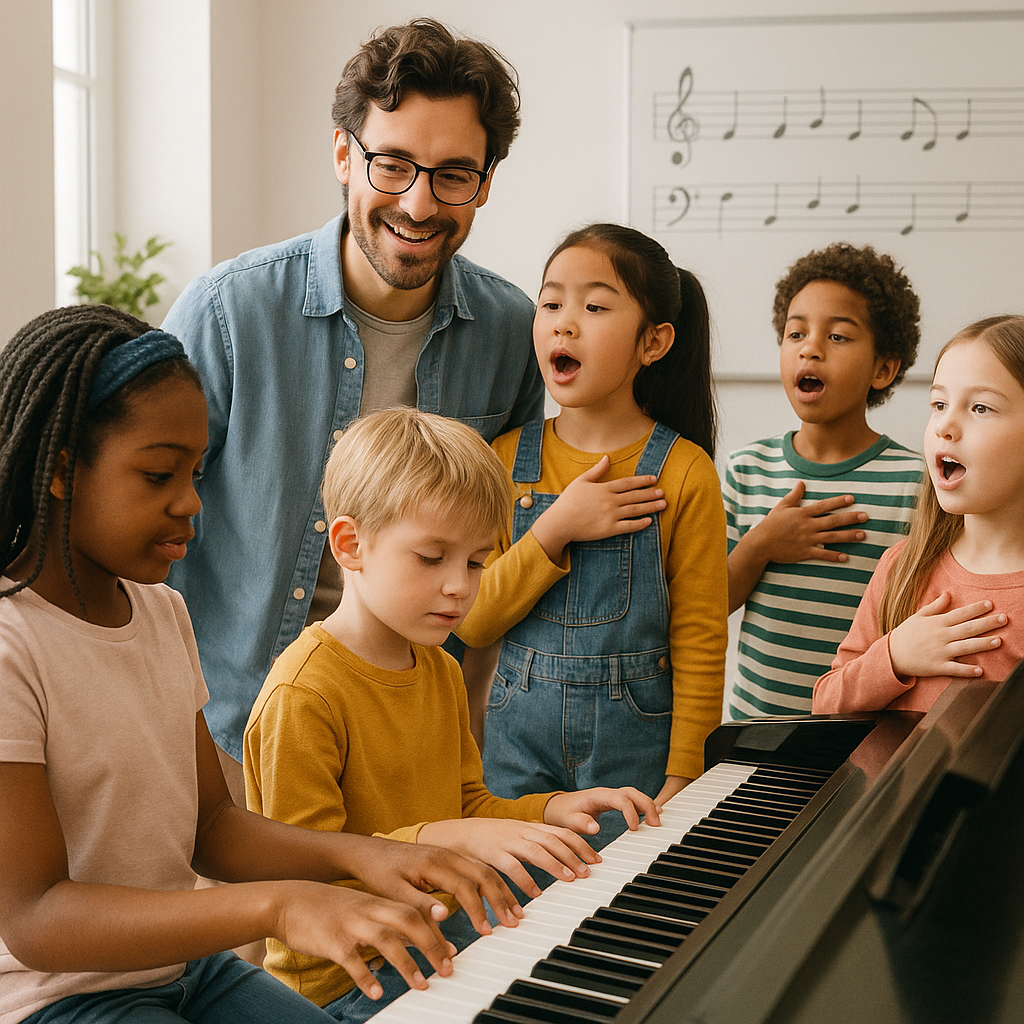
Discover how music education shapes young minds, builds essential life skills, and creates lasting confidence that extends far beyond the practice room.
Building Confidence Through Musical Expression
Music education provides students with a unique platform for self-expression that naturally builds confidence from the inside out. When children and young adults engage with music—whether learning piano, voice, or participating in ensemble performances—they discover their own creative voice in a supportive environment. Each successful note played, each song memorized, and each performance completed becomes a tangible achievement that reinforces their belief in their own capabilities.
The journey of musical learning offers countless opportunities for students to experience growth through manageable challenges. As they progress from simple melodies to more complex pieces, students develop a deep sense of accomplishment that translates into confidence across all areas of their lives. This confidence is particularly evident during recitals and performances, where students learn to manage performance anxiety, present themselves with poise, and celebrate their hard work in front of an audience. The supportive encouragement provided by qualified instructors helps students understand that mistakes are part of the learning process, fostering resilience and a positive mindset that extends well beyond the practice room.
Cognitive Development and Academic Performance Enhancement
Research consistently demonstrates that music education significantly enhances cognitive development in students of all ages. Learning to read music, understand rhythm, and coordinate physical movements activates multiple areas of the brain simultaneously, strengthening neural connections that support memory, attention, and problem-solving skills. Students engaged in regular music instruction often show improved performance in mathematics, as musical concepts like rhythm, counting, and pattern recognition directly correlate with mathematical thinking.
The structured nature of music lessons also enhances executive function skills that are critical for academic success. Students learn to focus their attention for extended periods, follow multi-step instructions, and retain complex information—all transferable skills that support performance across the curriculum. The discipline required to practice regularly and master new musical concepts teaches students effective learning strategies that they can apply to any subject. Furthermore, the process of learning music strengthens auditory processing abilities, which are fundamental to language development and reading comprehension, providing students with a solid foundation for literacy and communication skills throughout their educational journey.
Developing Discipline and Goal-Setting Skills
Music education instills essential discipline and goal-setting skills that serve students throughout their entire lives. The structured progression inherent in music learning—from mastering basic techniques to performing complex pieces—teaches students the value of consistent effort and incremental progress. Regular practice becomes a lesson in time management and personal accountability, as students learn that improvement requires dedication and cannot be achieved through shortcuts or overnight success.
Through personalized instruction, students learn to set realistic short-term and long-term goals, whether preparing for an upcoming recital, mastering a challenging piece, or developing proficiency in a new musical style. This goal-oriented approach helps students understand the relationship between effort and achievement, building intrinsic motivation and self-discipline. The experience of working steadily toward a musical goal, encountering obstacles, adjusting strategies, and ultimately achieving success creates a powerful framework for approaching challenges in all areas of life. Students develop the mental toughness to persist through difficult passages, the patience to refine their technique through repetition, and the satisfaction of knowing that their hard work produces measurable results.
Social and Emotional Growth Through Music
Music education provides rich opportunities for social connection and emotional development that are essential for well-rounded growth. When students participate in group lessons, ensembles, or recitals, they learn valuable collaboration skills, including listening to others, coordinating their efforts with fellow performers, and contributing their unique talents to a collective goal. These experiences foster teamwork, empathy, and an appreciation for diverse perspectives—qualities that are fundamental to building positive relationships throughout life.
Beyond social development, music offers students a healthy outlet for emotional expression and processing. Playing an instrument or singing allows students to channel their feelings constructively, developing emotional intelligence and self-awareness in the process. The supportive environment created by nurturing instructors helps students feel safe exploring their emotions through music, building resilience and coping strategies that support their overall mental wellness. Music education also teaches students to give and receive constructive feedback graciously, celebrate the successes of their peers, and find joy in both individual achievement and shared musical experiences. These social and emotional competencies become lifelong assets that support healthy relationships, effective communication, and personal fulfillment.
Creating Lifelong Learners and Well-Rounded Individuals
Perhaps the most profound benefit of music education is its ability to cultivate lifelong learners who approach the world with curiosity, creativity, and confidence. Students who engage with music develop an appreciation for the learning process itself, understanding that mastery is a journey rather than a destination. This mindset encourages continuous growth and the pursuit of excellence across all endeavors, whether artistic, academic, or personal. Music education teaches students that challenges are opportunities for development and that persistence in the face of difficulty leads to meaningful achievement.
The skills and values developed through music education—discipline, creativity, collaboration, emotional expression, and goal achievement—combine to create truly well-rounded individuals prepared to thrive in an ever-changing world. Students who participate in music programs often demonstrate enhanced creativity in problem-solving, greater cultural awareness, and a deeper capacity for appreciating beauty and complexity in various forms. Whether students pursue music professionally or simply carry their musical skills into adulthood as a source of personal enrichment, the foundation built through quality music instruction provides lasting benefits that enhance quality of life. By investing in music education, families give their children tools for personal growth, self-expression, and connection that will serve them throughout their entire lives, creating individuals who are not only skilled and knowledgeable but also compassionate, resilient, and authentically engaged with the world around them.