
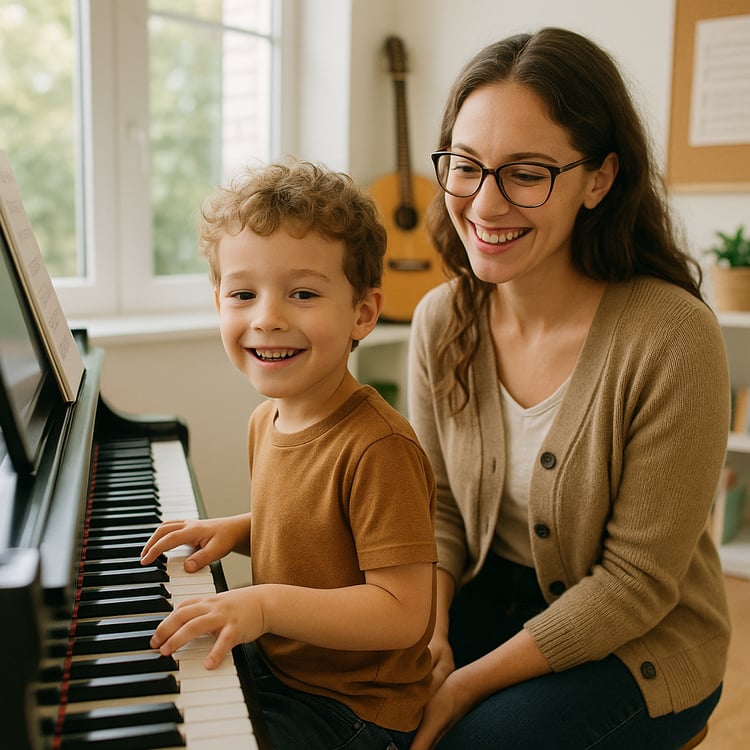
Discover how personalized music instruction empowers children to develop self-assurance, resilience, and a positive sense of accomplishment that extends far beyond the practice room.
The Power of Personalized Attention in Music Education
Private voice and piano lessons offer children something increasingly rare in today's fast-paced world: the undivided attention of a dedicated instructor who understands their unique learning style, pace, and potential. Unlike group classes where individual needs can be overlooked, one-on-one music instruction creates a supportive environment where each child receives tailored guidance designed specifically for their developmental stage and abilities.
This personalized approach allows instructors to identify and address specific challenges immediately, whether a child struggles with breath control in vocal exercises or finger placement on piano keys. The instructor can adjust teaching methods in real time, ensuring that each lesson builds on previous successes while gently addressing areas that need improvement. This individualized attention communicates a powerful message to children: their progress matters, their efforts are valued, and their musical journey is important.
Through this nurturing relationship, children learn that making mistakes is not only acceptable but essential to growth. In the safety of one-on-one instruction, students feel comfortable experimenting with new techniques, asking questions without fear of judgment, and taking creative risks. This supportive foundation becomes the bedrock upon which genuine confidence is built, allowing children to develop not just as musicians, but as individuals who believe in their capacity to learn and improve.
Building Self-Belief Through Progressive Skill Development
Confidence grows naturally when children witness their own progress through measurable achievements. Private voice and piano lessons provide a clear roadmap for skill development, with each new technique mastered serving as tangible evidence of capability. When a child successfully plays a challenging passage they struggled with just weeks earlier, or hits a difficult note they once thought impossible, they experience a profound sense of accomplishment that reinforces self-belief.
The progressive nature of music education creates countless opportunities for small victories that accumulate into significant confidence gains. Learning to read music notation, mastering proper posture and breathing techniques, developing finger strength and dexterity, and understanding musical theory all represent discrete skills that children can recognize and celebrate. Each milestone reached becomes proof of their ability to overcome challenges through dedication and practice.
Instructors in private voice and piano lessons carefully structure learning objectives to ensure appropriate challenges that stretch abilities without overwhelming students. This balanced approach prevents frustration while maintaining engagement, creating a positive feedback loop where success breeds motivation, which in turn leads to greater effort and further achievement. Children begin to internalize the understanding that consistent practice and focused effort yield results, a lesson that extends far beyond music education into every aspect of personal development.
As students progress from simple melodies to more complex compositions, they develop a growth mindset that recognizes ability as something cultivated rather than innate. This realization transforms how children approach not just music, but academic challenges, social situations, and future endeavors. The confidence gained through mastering musical skills becomes a transferable asset that empowers children to tackle new challenges with optimism and determination.
Overcoming Performance Anxiety and Embracing Growth
One of the most valuable aspects of private voice and piano lessons is the opportunity to practice performance skills in a low-pressure environment before facing larger audiences. During one-on-one instruction, children gradually build comfort with performing for their instructor, learning to manage the nervous energy that naturally accompanies sharing their musical abilities with others. This controlled exposure helps demystify performance anxiety and transforms it from an obstacle into a manageable aspect of musical expression.
Instructors provide constructive feedback that balances encouragement with specific guidance for improvement, helping children develop resilience in the face of critique. Rather than viewing corrections as failures, students learn to interpret feedback as valuable information that accelerates their progress. This shift in perspective is crucial for building confidence, as children come to understand that improvement is a continuous process rather than a destination to be reached.
As students prepare for recitals or other performance opportunities, private lessons serve as safe rehearsal spaces where mistakes can be made and corrected without public embarrassment. Children learn strategies for managing stage fright, such as focused breathing techniques, positive self-talk, and mental rehearsal. These tools prove invaluable not only for musical performances but also for public speaking, academic presentations, and social interactions that require poise under pressure.
The experience of successfully performing a piece they have worked diligently to master provides children with an unshakeable confidence that they carry into other areas of life. They learn that preparation combined with courage can overcome anxiety, and that the temporary discomfort of stepping into the spotlight is far outweighed by the pride and satisfaction of sharing their talents. This lesson in embracing vulnerability while maintaining composure becomes a cornerstone of personal confidence that benefits children throughout their development.
Creating Lasting Resilience Through Musical Challenges
Private voice and piano lessons teach children that perseverance in the face of difficulty builds character and capability. When a student encounters a particularly challenging piece or struggles to master a specific technique, the one-on-one format allows instructors to provide the sustained support needed to work through frustration without giving up. This process of confronting and overcoming obstacles develops resilience that extends well beyond music education.
Children learn that progress is rarely linear, and that periods of plateau or struggle are natural parts of any learning journey. Through consistent encouragement and strategic problem-solving with their instructor, students develop strategies for breaking down overwhelming challenges into manageable components. This approach teaches valuable life skills such as patience, strategic thinking, and the understanding that complex problems can be solved through systematic effort.
The discipline required for regular practice reinforces the connection between consistent effort and improvement. Children discover that their dedication directly influences outcomes, fostering an internal locus of control that empowers them to take ownership of their development. This sense of agency is fundamental to confidence, as children recognize their capacity to influence their own success through deliberate action and sustained commitment.
When students finally master a piece that once seemed impossibly difficult, they experience a profound sense of achievement that validates their persistence. These breakthrough moments become reference points that children can draw upon when facing future challenges, reminding them that they possess the resilience and determination to overcome adversity. The confidence born from these experiences becomes a permanent part of their self-concept, shaping how they approach obstacles throughout their lives.
The Whole-Person Impact of Music Instruction
The benefits of private voice and piano lessons extend far beyond technical musical ability, contributing to comprehensive child development across multiple domains. Research consistently demonstrates that music education enhances cognitive function, improving memory, attention, and executive function skills that support academic achievement. The discipline and focus required for musical practice strengthen neural pathways that benefit learning across all subject areas.
Social and emotional development also flourishes through one-on-one music instruction. Children develop emotional intelligence as they learn to express feelings through musical interpretation, and they build communication skills through the collaborative relationship with their instructor. The supportive mentorship inherent in private lessons provides children with a positive adult role model who demonstrates the value of dedication, patience, and continuous improvement.
The confidence children gain through music education manifests in improved stage presence that translates directly to enhanced public speaking abilities. Students who have learned to command attention while performing a musical piece find they can apply the same poise and presence when delivering presentations, participating in class discussions, or engaging in social situations that require self-assurance. The ability to project confidence while managing internal nervousness becomes a transferable skill that serves children throughout their personal and professional lives.
Perhaps most importantly, private voice and piano lessons provide children with a creative outlet for self-expression and a lifelong source of joy and fulfillment. Music becomes not just a skill but a means of connecting with others, processing emotions, and experiencing the profound satisfaction of artistic creation. The confidence that develops through this journey reflects not just competence in a particular domain, but a fundamental belief in one's capacity for growth, resilience, and meaningful contribution. This holistic impact on child development represents the true value of personalized music instruction, creating confident individuals prepared to face life's challenges with courage and optimism.