
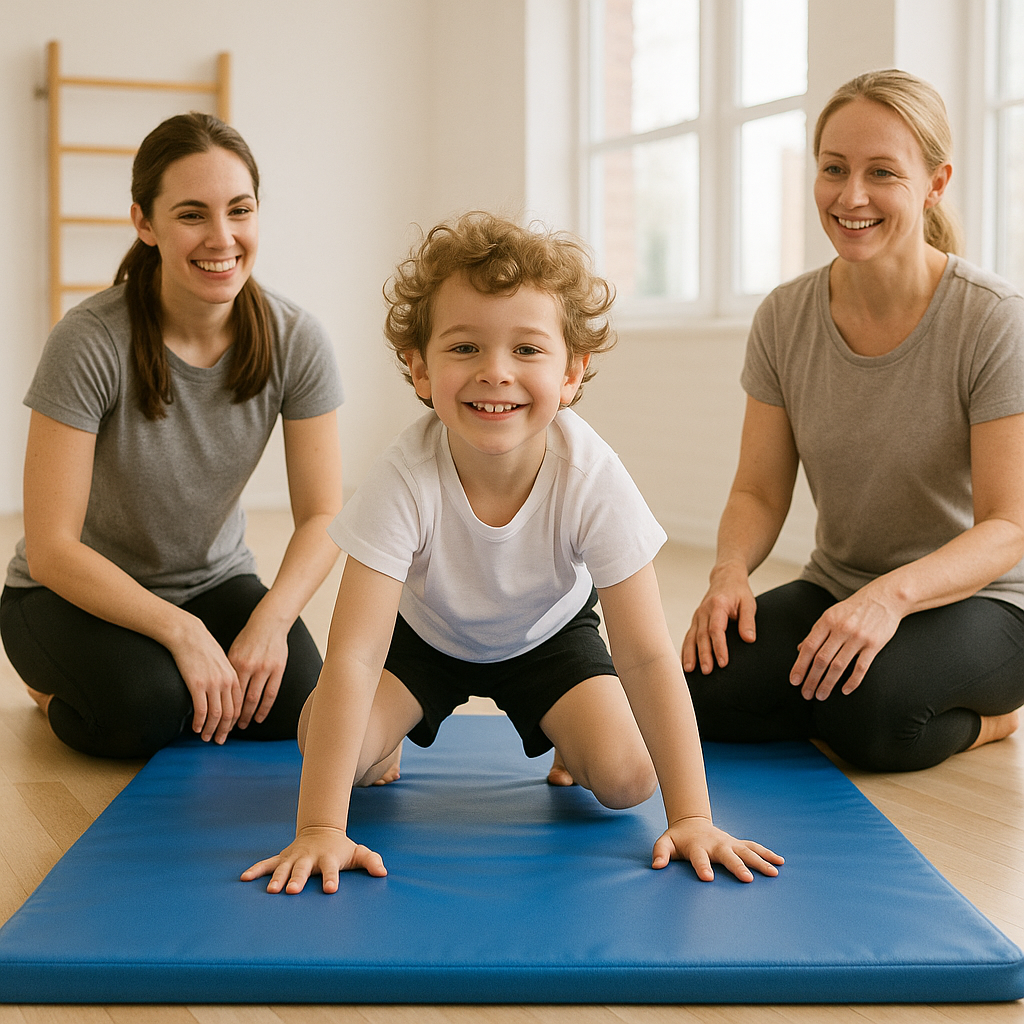
Discover how tumbling and acrobatics classes build strength, confidence, and grace while providing your child with a supportive foundation for athletic and artistic growth.
What to Expect When Your Child Steps Into Their First Tumbling & Acro Class
Walking into a first tumbling and acrobatics class can feel like a big step for both parents and young beginners. For children ages 4 through 10, the environment is designed to be welcoming, structured, and developmentally appropriate. Upon arrival, you'll typically be greeted by knowledgeable and supportive coaching staff who understand the importance of making that first impression count. The facility layout—whether it includes padded mats, foam pits, balance beams, or wall-mounted mirrors—is intentionally organized to ensure safety and encourage exploration. Your child will be introduced to other young athletes in age-appropriate groupings, fostering a sense of community and shared learning from day one.
During the first session, instructors focus on building comfort and familiarity rather than rushing into advanced skills. Expect activities that prioritize body awareness, coordination, and foundational movement patterns such as forward rolls, cartwheels, and basic balancing exercises. Certified instructors use fun and engaging training methods to help children understand proper body positioning, hand placement, and spatial awareness. Classes often begin with controlled progressive warm-ups that prepare muscles and joints for safe movement, reducing the risk of injury while instilling healthy habits early on.
Communication is also central to the first class experience. Instructors will often take time to explain what each activity involves, using clear and encouraging language that builds confidence. Parents should expect transparency about class structure, skill progression timelines, and how progress will be tracked over time. Many programs, including those focused on youth gymnastics and tumbling, provide accessible parent portals or apps for convenient class enrollment, billing, and communication. This level of organization ensures that you remain informed and engaged in your child's developmental journey, reinforcing the supportive and nurturing approach that defines quality beginner tumbling lessons.
Building Foundational Skills Through Age-Appropriate Movement and Technique
Foundational skills in tumbling and acrobatics classes are not just about learning tricks—they are about developing core strength, flexibility, coordination, and body control that will serve young athletes throughout their lives. For classes designed for young beginners, instructors emphasize age-appropriate skill drills that respect developmental stages and physical readiness. Children ages 4 to 6 may focus on basic locomotor movements, balance challenges, and playful exploration of body shapes and positions. As they progress into ages 7 to 10, the curriculum gradually introduces more complex movements such as handstands, bridges, and basic tumbling sequences that require increased strength and spatial awareness.
Expert trainers and certified instructors understand that every child develops at their own pace. Quality kids acrobatics programs incorporate personalized coaching and technique correction to address individual strengths and areas for growth. Instructors provide constructive feedback that is both specific and supportive, helping young athletes understand how to refine their form without feeling discouraged. This approach aligns with the principle that repetition without instruction is counterproductive—instead, each movement is broken down into manageable components, practiced with intention, and reinforced through positive encouragement.
The use of structured strength and conditioning programs tailored for young bodies is another hallmark of effective beginner tumbling lessons. These programs integrate exercises that build explosive power, muscular endurance, and flexibility in ways that feel like play rather than work. Activities such as animal walks, partner balances, and obstacle courses keep children motivated and engaged while simultaneously developing the physical literacy necessary for more advanced acrobatic skills. Over time, this progressive approach builds mind and muscle memory, laying a solid foundation for continued athletic and artistic growth.
How Tumbling & Acro Develops Confidence and Mental Resilience in Young Athletes
Confidence is not an innate trait—it is cultivated through experience, encouragement, and gradual mastery of new challenges. Tumbling and acrobatics classes provide a unique environment where young athletes can develop self-belief and resilience in a safe and supportive setting. Each skill learned, whether it is a successful cartwheel or maintaining balance on a beam, becomes a tangible achievement that reinforces a child's sense of competence. This gradual preparation of a competitive mindset is crucial, as it teaches children that progress comes from effort, persistence, and the willingness to learn from mistakes.
Instructors play a vital role in fostering this mental resilience by using motivating and inspirational language that emphasizes growth rather than perfection. Phrases that promote effort and improvement replace counterproductive language that can undermine a child's confidence. For example, instead of allowing children to say, 'I can't do this,' instructors encourage them to reframe their thinking with statements like, 'I'm still learning this skill.' This subtle but powerful shift in mindset helps young athletes understand that challenges are opportunities for growth, not indicators of failure. Dynamic collaborative coach-player relationships further support this development, as children learn to trust their instructors and feel comfortable taking risks in a controlled environment.
Beyond the physical benefits, tumbling and acrobatics classes also teach important life skills such as focus, discipline, and perseverance. The process of working toward a new skill—practicing repeatedly, receiving feedback, and eventually achieving success—mirrors the challenges children will face in academics, relationships, and other areas of life. This character development alongside athletic skills is a core value of comprehensive youth programs, ensuring that children grow not only as athletes but as confident, resilient individuals ready to tackle whatever comes their way.
Creating a Safe and Supportive Environment for Skill Progression
Safety is the cornerstone of any quality tumbling and acrobatics program, particularly for young beginners who are still developing body awareness and coordination. Professional facilities invest in high-quality equipment such as spring floors, thick mats, foam pits, and spotting rigs to minimize injury risk and provide a cushioned landing for new skills. Instructors are trained in proper spotting techniques, ensuring that children receive physical support when attempting challenging movements. This emphasis on arm care and injury prevention extends to teaching children how to fall safely, how to recognize when they are fatigued, and how to communicate discomfort or uncertainty to their coaches.
A supportive environment also means maintaining small class sizes that allow for personalized instruction tailored to individual needs. When instructors can focus on fewer students at a time, they are better able to monitor technique, provide real-time corrections, and ensure that each child is progressing at an appropriate pace. This is especially important in beginner tumbling lessons, where foundational habits are being established. Quality programs also incorporate educational content for proper techniques, helping both children and parents understand the biomechanics behind each movement and why certain progressions are necessary for long-term success and safety.
Beyond physical safety, a supportive environment nurtures emotional well-being by fostering a culture of respect, encouragement, and inclusivity. Children learn to celebrate each other's successes, support peers who are struggling, and understand that everyone's journey is unique. Instructors model this behavior through their interactions, creating a space where children feel comfortable asking questions, making mistakes, and expressing themselves. This combination of physical safety measures and emotional support ensures that young athletes can focus on learning and growth, building a positive association with physical activity that will benefit them for years to come.
Preparing Your Child for Success Beyond the First Class
The first tumbling and acrobatics class is just the beginning of a rewarding journey, and there are several ways parents can support their child's ongoing success. One of the most important steps is establishing consistent attendance. Regular participation allows children to build on previous lessons, reinforce muscle memory, and develop meaningful relationships with instructors and peers. Many programs offer flexible scheduling options and convenient online management of student activities and billing, making it easier for busy families to prioritize classes without logistical stress.
At home, parents can encourage physical activity that complements what children are learning in class. Simple activities such as practicing balance on one foot, doing forward rolls on a soft surface, or stretching together as a family can reinforce skills and keep children engaged between sessions. However, it is important to avoid pushing children to attempt advanced skills without proper supervision and equipment. Instead, focus on fostering a positive attitude toward practice, celebrating effort and improvement rather than perfection. This supportive encouragement builds confidence and helps children internalize the values of persistence and resilience.
Finally, maintaining open communication with instructors is essential for tracking progress and addressing any concerns that may arise. Quality programs offer accessible channels for parent-instructor communication, whether through apps, parent portals, or in-person conversations. Do not hesitate to ask questions about skill progression, class expectations, or how you can best support your child at home. Instructors are partners in your child's development and are committed to providing the guidance and resources necessary for success. By staying engaged, informed, and encouraging, parents play a crucial role in helping their children build strength, confidence, and grace that will serve them both in tumbling and acrobatics classes and in all areas of life.