
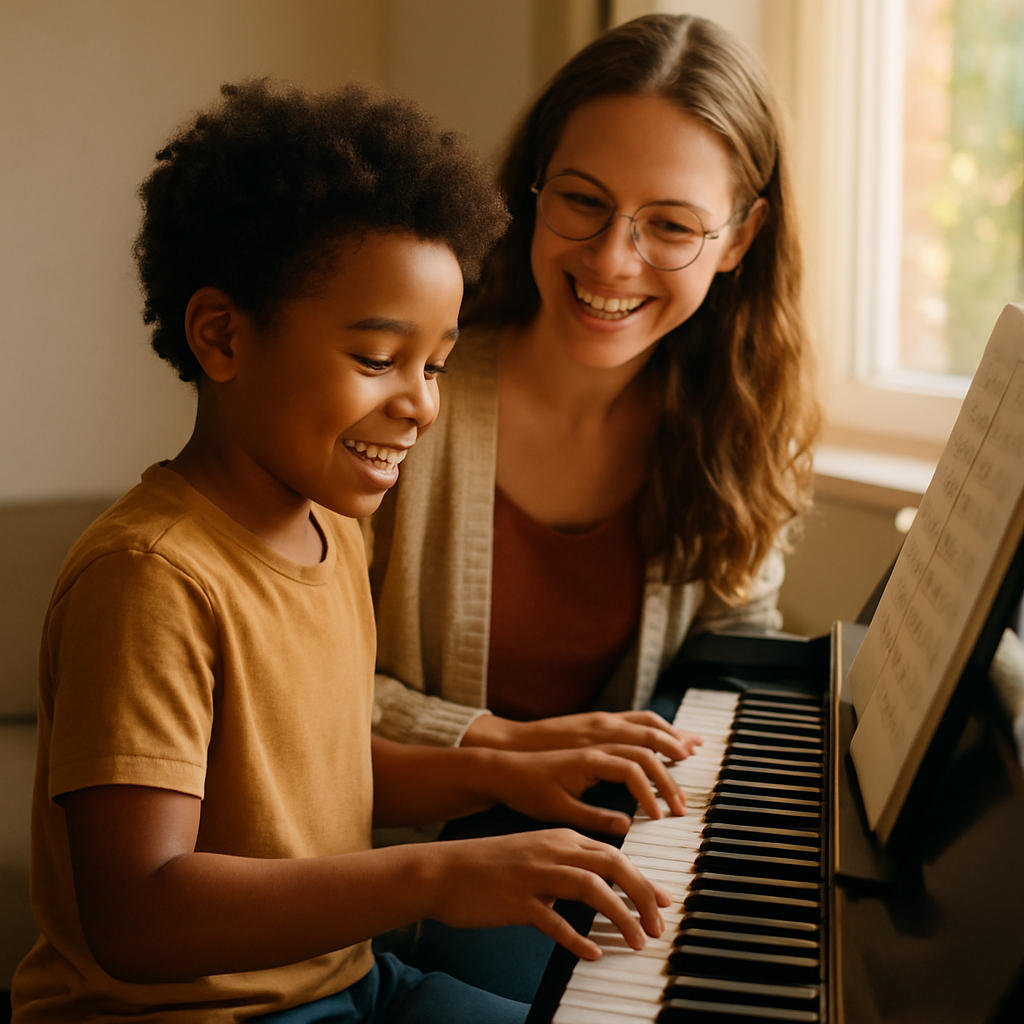
Discover how private voice and piano lessons build lasting confidence in young learners through personalized instruction, supportive encouragement, and measurable progress that transforms how children view their abilities.
Personalized Instruction Builds Self-Belief Through Individual Attention
Private voice and piano lessons create a learning environment uniquely tailored to each child's pace, learning style, and individual needs. Unlike group settings where shy children may feel overshadowed, one-on-one music instruction allows instructors to focus entirely on the student's unique strengths and areas for growth. This personalized approach ensures that every child receives the specific guidance necessary to develop their musical abilities without the pressure of comparison to peers.
When instructors provide individual attention, they can identify exactly what motivates each student and adjust their teaching methods accordingly. For shy children ages 4 to 12, this means creating a comfortable space where questions are encouraged and mistakes become valuable learning opportunities rather than sources of embarrassment. The instructor-student relationship becomes a foundation of trust, where children feel safe to explore their musical voice without judgment.
Parents can support this confidence-building process at home by celebrating small practice victories and creating a dedicated practice space that feels welcoming. Establishing a consistent routine for practice—even just 10 to 15 minutes daily—reinforces the value of their child's musical journey and demonstrates that their progress matters. Simple encouragement like 'I noticed how clearly you sang that phrase today' helps children recognize their own growth and builds authentic self-belief.
Measurable Progress Creates Tangible Evidence Of Growth
One of the most powerful benefits of music lessons for building child confidence is the ability to track measurable progress over time. Private voice and piano lessons provide clear milestones—from mastering a new scale to performing a complete piece—that give shy children concrete evidence of their capabilities. Unlike abstract skills that are difficult to quantify, musical progress is observable and undeniable, creating a powerful foundation for self-esteem.
As children advance through repertoire and technique exercises, they develop a portfolio of accomplishments that demonstrate their dedication and growth. Recording practice sessions or keeping a practice journal allows students to hear and see their improvement, reinforcing the connection between effort and achievement. This tangible documentation becomes especially meaningful for children who struggle with self-doubt, as they can revisit these records whenever they need reassurance of their abilities.
Between lessons, parents can reinforce this confidence by acknowledging specific improvements rather than offering generic praise. Comments like 'Your finger placement on that chord progression was much smoother this week' help children develop awareness of their own progress. Creating a visual progress chart or celebrating when your child completes a new piece provides additional motivation and helps shy learners recognize that consistent effort leads to meaningful growth.
Safe Learning Environments Foster Authentic Self-Expression
The private lesson setting creates a judgment-free zone where children can experiment with their musical expression without fear of peer scrutiny. This safe learning environment is particularly valuable for shy students who may feel self-conscious about their voice or worry about making mistakes in front of others. One-on-one music instruction allows children to take creative risks, try different interpretations, and discover their authentic musical voice at their own pace.
Music education provides a unique outlet for emotional expression that benefits children's overall self-esteem and mental well-being. Through voice lessons for kids and piano lessons for kids, students learn that their feelings and interpretations are valuable and worthy of expression. This validation extends beyond music, teaching children that their unique perspective matters and building the confidence to share themselves authentically in other areas of life.
Parents can extend this safe environment into the home by respecting practice time as a protected space. Avoid correcting or criticizing during practice sessions, and instead create opportunities for your child to perform informally for family members when they feel ready. Ask open-ended questions like 'What do you enjoy most about that piece?' to encourage reflection and self-expression. This supportive approach helps children develop trust in their own artistic choices and strengthens their willingness to share their talents with others.
Performance Opportunities Develop Courage And Stage Presence
While the private lesson environment provides safety, carefully structured performance opportunities help children gradually build the courage to share their talents with others. Private voice and piano lessons often include recitals, informal studio performances, or recorded demonstrations that allow students to experience performing in supportive, low-pressure settings. These experiences teach children that they can manage nervous feelings and succeed even when stepping outside their comfort zone.
Performance preparation itself becomes a confidence-building process. As children rehearse, visualize success, and develop strategies for managing performance anxiety, they acquire tools that serve them well beyond music. The process of preparing for and completing a performance—no matter how small—demonstrates that courage is not the absence of fear but the willingness to move forward despite it. For shy children, successfully navigating these experiences provides powerful evidence that they are capable of more than they initially believed.
At home, parents can support performance readiness by creating low-stakes opportunities to practice performing. Invite your child to play for one trusted family member or friend, or record a video performance to share with distant relatives. Practice positive visualization together, discussing what success looks like and how your child will feel after completing their performance. After any performance opportunity, focus your feedback on their bravery in participating rather than technical perfection, reinforcing that showing up and trying is itself a significant achievement worthy of celebration.
Supportive Feedback Transforms Challenges Into Stepping Stones
The quality of feedback children receive during private music instruction profoundly impacts how they view challenges and setbacks. Skilled instructors provide constructive feedback that acknowledges effort, identifies specific areas for improvement, and frames difficulties as natural parts of the learning process rather than personal failures. This approach to correction is especially important for shy children who may be particularly sensitive to criticism or quick to internalize negative messages about their abilities.
In one-on-one music instruction, teachers can calibrate their feedback to each student's emotional needs and readiness. They help children understand that struggle is evidence of growth, not inadequacy, and that every accomplished musician has worked through similar challenges. This reframing transforms the student's relationship with difficulty, building resilience and the understanding that persistence through challenges is how skills are developed. Over time, children internalize this growth mindset and apply it to challenges beyond their music education.
Parents play a crucial role in reinforcing this positive approach to challenges at home. When your child expresses frustration with a difficult passage or technique, resist the urge to minimize their feelings or immediately solve the problem. Instead, acknowledge the difficulty while expressing confidence in their ability to work through it: 'That section is challenging, and I've noticed how you keep working on it. That persistence will help you master it.' Help your child break overwhelming challenges into smaller, manageable steps, and celebrate the effort invested in working through difficulties. This supportive encouragement helps children develop resilience and confidence that extends far beyond the piano bench or vocal studio.