
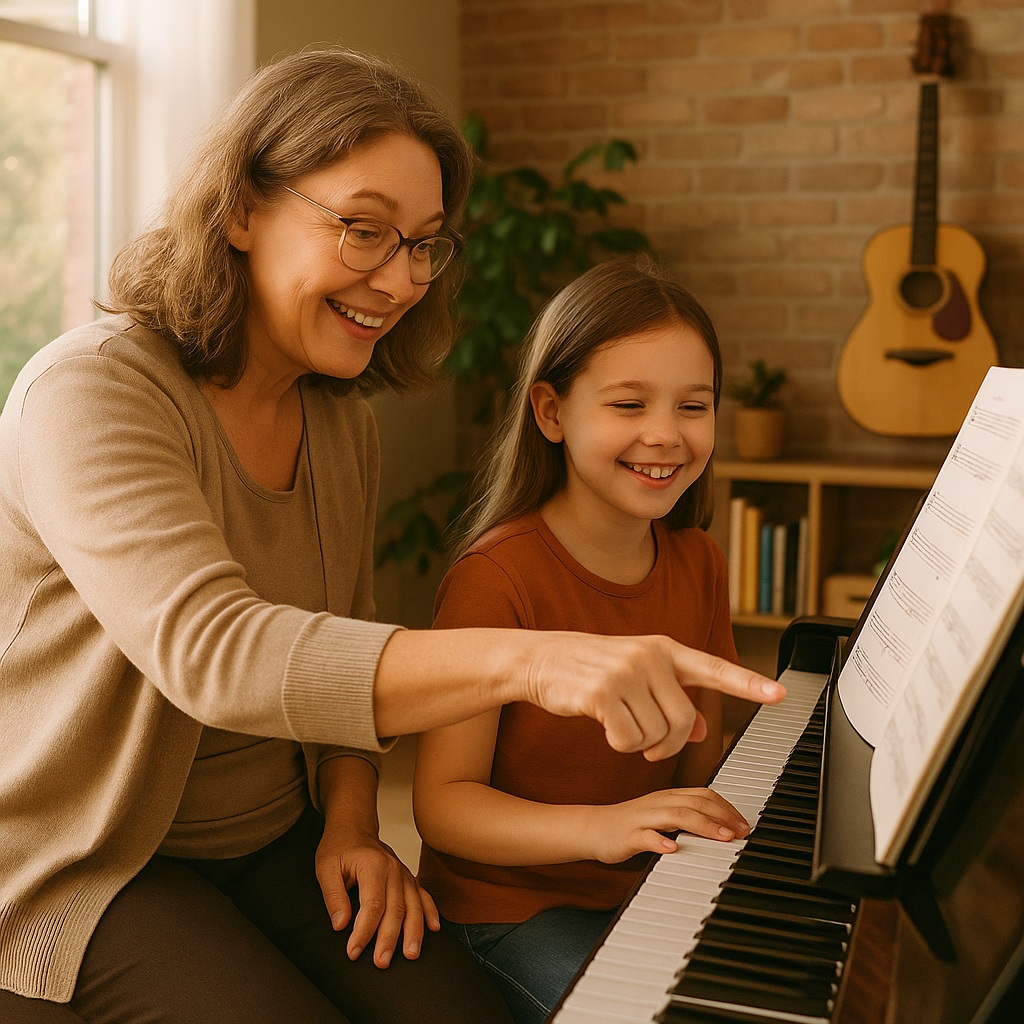
Finding the right piano and voice teacher for your child can make all the difference between a lifelong love of music and early frustration—here's how to choose wisely.
Understanding Their Teaching Philosophy and Approach
When evaluating music lesson providers for your child, the instructor's teaching philosophy serves as the foundation for your child's entire learning experience. Begin by asking: 'What is your teaching philosophy, and how do you adapt it for different age groups?' A quality instructor will articulate a clear, developmentally appropriate approach that balances technical skill development with fostering genuine enthusiasm for music. Look for answers that emphasize patience, encouragement, and personalized pacing—red flags include rigid, one-size-fits-all methodologies or an overemphasis on competition at the expense of enjoyment.
The best instructors for kids recognize that children's piano lessons and kids voice lessons require fundamentally different approaches than adult instruction. Ask: 'How do you keep young students engaged and motivated during lessons?' Strong responses will include specific strategies like incorporating games, using visual aids, breaking complex concepts into manageable steps, and celebrating small wins. Teachers who understand child development will mention adjusting their energy level, using age-appropriate language, and building confidence through supportive feedback rather than criticism. This nurturing approach aligns with research showing that positive reinforcement creates lasting engagement with music education.
Understanding how an instructor handles challenges is equally important. Inquire: 'How do you approach students who feel frustrated or want to give up?' The answer should demonstrate emotional intelligence and problem-solving skills. Effective teachers acknowledge feelings, identify the root cause of frustration, adjust their approach or expectations, and help students develop resilience. They avoid phrases that undermine confidence and instead reframe challenges as natural parts of the learning process. This supportive methodology helps children build not just musical skills, but also character traits like perseverance and self-belief that extend far beyond the music room.
Assessing Their Experience with Young Learners
Experience with pediatric populations is non-negotiable when selecting private piano and voice lessons for kids. Start with the direct question: 'How many years have you been teaching children, and what age ranges do you specialize in?' Quality instructors will provide specific numbers and demonstrate comfort across the 4-18 age spectrum, or clearly define their specialty area. Be cautious of vague responses or instructors who primarily teach adults attempting to add children to their roster. The developmental differences between a preschooler, elementary student, and teenager are substantial, and effective teaching requires specialized knowledge of each stage.
Dig deeper by asking: 'What certifications, training, or continuing education have you completed specific to teaching children?' Look for credentials from recognized music education organizations, child development coursework, or specialized training in methods like Suzuki, Kodály, or Orff for piano, and age-appropriate vocal pedagogy for voice instruction. The best instructors for kids invest in ongoing professional development because best practices in music education continually evolve. This commitment to learning demonstrates dedication to providing current, evidence-based instruction that protects young voices and builds proper foundational technique.
Finally, request concrete evidence of their track record: 'Can you share examples of student progress or success stories from children similar to my child's age and experience level?' Strong candidates will enthusiastically describe former students' achievements—not just competition wins, but stories of children who developed confidence, overcame challenges, or discovered a lifelong passion for music. They should be able to provide references from other parents of young students. This real-world validation offers insights into how the instructor builds relationships with families, communicates progress, and creates meaningful growth experiences for developing musicians.
Evaluating Communication and Progress Tracking Methods
Transparent, consistent communication between instructor and parents forms the backbone of successful piano and singing programs for children. Ask directly: 'How do you communicate with parents about their child's progress, and how frequently?' The ideal answer includes regular progress updates—whether through brief post-lesson conversations, monthly emails, digital portals, or scheduled parent conferences. Teachers who understand family-centered care recognize that parents are partners in their child's musical development. They should proactively share both accomplishments and areas needing additional support, giving you clear visibility into your child's learning journey.
Understanding the instructor's progress tracking methodology is equally critical. Inquire: 'What methods do you use to track and measure student progress, and will I receive documentation?' Professional music lesson providers maintain detailed records of repertoire covered, skills mastered, and goals achieved. Some may use digital apps, practice logs, video recordings, or structured curricula with defined benchmarks. This documentation serves multiple purposes: it helps the instructor tailor future lessons, provides tangible evidence of advancement, and creates accountability. When instructors can show you exactly where your child started and how far they've progressed, it builds confidence in their instructional approach.
Finally, clarify expectations around parent involvement: 'What role do you expect parents to play in supporting practice and learning at home?' Quality instructors provide specific, actionable guidance for home practice—not vague directives like 'practice 30 minutes daily,' but structured practice plans with clear objectives. They should explain how parents can supportively encourage without creating pressure, help establish consistent practice routines, and recognize when a child needs a break versus when gentle redirection is appropriate. This collaborative framework ensures everyone—teacher, parent, and student—works together toward shared goals, maximizing the effectiveness of private piano and voice lessons for kids.
Exploring Their Curriculum and Lesson Structure
A well-structured curriculum distinguishes professional children's piano lessons and kids voice lessons from informal instruction. Begin by asking: 'Can you walk me through your curriculum and how lessons are typically structured?' Strong instructors will outline a clear progression of skills, from foundational concepts through advanced techniques, adapted to each student's pace. For piano, this might include note reading, rhythm, proper hand position, scales, and age-appropriate repertoire. For voice, expect discussion of breath support, vocal health, pitch accuracy, and stylistically diverse song selection. The curriculum should balance technical development with creative expression, ensuring students build solid fundamentals while maintaining enthusiasm.
Flexibility within structure is the hallmark of effective teaching. Ask: 'How do you customize your curriculum to match each student's interests, learning style, and goals?' The best instructors for kids recognize that a child passionate about musical theater requires different repertoire than one drawn to classical music, and a kinesthetic learner benefits from different teaching strategies than an auditory learner. Quality teachers conduct assessments to understand each student's strengths, challenges, preferences, and aspirations, then thoughtfully adapt their approach. This personalization demonstrates commitment to student-centered education rather than teaching by rote formula.
Understanding lesson components and pacing helps set realistic expectations. Inquire: 'How do you typically divide lesson time between different activities, and how do you determine when a student is ready to progress?' Professional instructors can articulate their time allocation—perhaps 10 minutes for warm-ups and technique, 20 minutes for repertoire, 10 minutes for theory or sight-reading, with adjustments based on student needs. They should use clear criteria for advancement, not arbitrary timelines. For young students especially, lessons may incorporate movement, games, or listening activities to maintain engagement. This structured yet responsive approach ensures comprehensive skill development while honoring each child's developmental readiness and maintaining their intrinsic motivation to learn.
Determining Fit for Your Child's Learning Style and Goals
The relationship between student and teacher profoundly impacts learning outcomes, making personal fit as important as technical qualifications. Start by asking: 'Can you describe your teaching personality and the type of students who thrive with you?' Self-aware instructors will honestly characterize their style—whether energetic and playful, calm and methodical, or somewhere between—and acknowledge which personalities mesh best with their approach. Some children flourish with enthusiastic, animated teachers who bring high energy; others need gentle, patient instructors who create quiet, focused environments. Neither style is superior; what matters is alignment with your child's temperament and learning preferences.
Goal alignment ensures everyone is working toward the same outcomes. Ask: 'How do you help students and families set realistic goals, and how do you support working toward them?' Quality music lesson providers engage in collaborative goal-setting conversations, helping families distinguish between short-term objectives (learning a specific piece), medium-term targets (participating in a recital), and long-term aspirations (whether recreational enjoyment or potential performance pathways). They should ask about your child's interests, prior experience, and family expectations, then provide honest assessment of what's achievable given time commitment and developmental stage. This transparency prevents frustration and ensures the instructor's teaching approach serves your family's actual needs.
Before committing, request a trial experience: 'Do you offer trial lessons or opportunities to observe your teaching before enrolling?' Many instructors provide introductory sessions, allowing both child and parent to assess comfort level, teaching style, and overall fit. Pay attention to how the instructor interacts with your child—do they make eye contact, speak at the child's level, demonstrate patience, and show genuine interest in your child as an individual? Notice your child's response: do they seem relaxed, engaged, and eager to return? Trust these observations. The most qualified instructor on paper won't produce results if your child doesn't feel safe, respected, and inspired in their presence. Finding private piano and voice lessons for kids that combine technical excellence with relational connection creates the foundation for meaningful, lasting musical development.